
Demand-responsive transport is not one single model.
Depending on the region, demand and existing public transport network, services can be designed in different ways: from fully flexible area-based transport to fixed lines, virtual lines or feeder models.
Across five evaluated on-demand projects in Baden-Württemberg, around 270,000 completed rides were recorded. This shows that flexible transport models are already part of real public transport today and provide added value.
Note: The figures used in this article are based on a recent study on the promotion of on-demand transport in Baden-Württemberg.
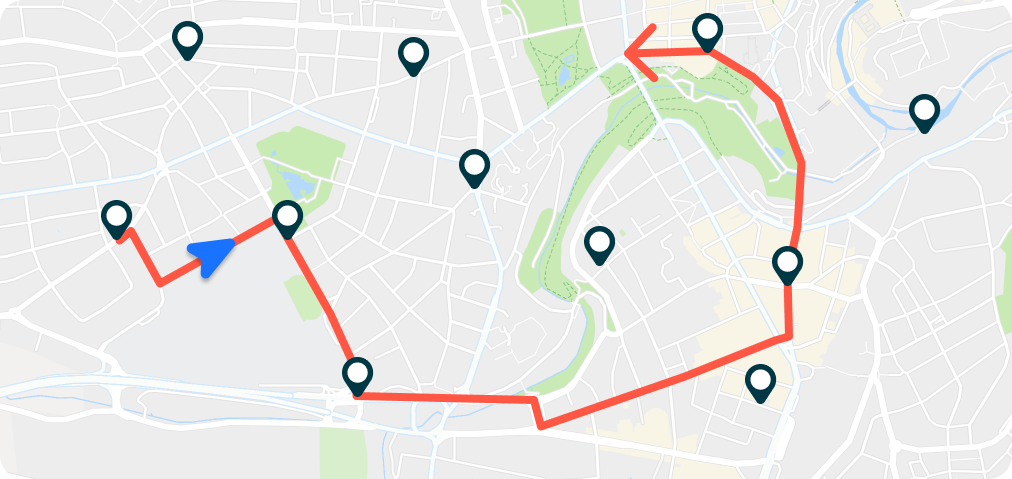
Free floating
Free floating is the most flexible form of DRT.
There are no fixed routes or timetables. Passengers book a ride, and the system calculates the route dynamically based on current demand.
This model can be useful where mobility needs are dispersed. However, flexibility alone does not automatically guarantee efficiency. In the available project data, current pooling rates ranged from 7% to 70%.
Corridor
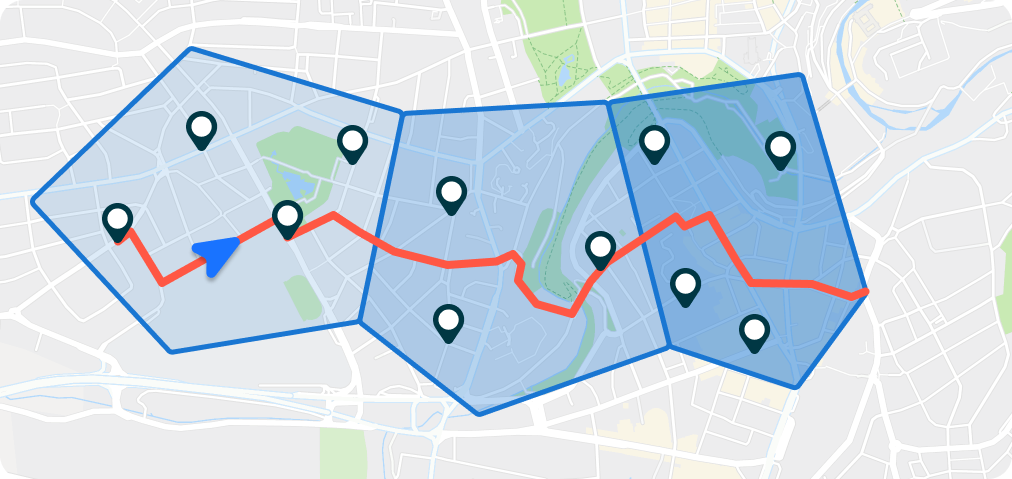
A corridor model gives the service more structure.
Vehicles operate within a defined corridor instead of moving freely across the whole service area. This can help connect several stops or settlements along a common direction, while still allowing flexibility in the exact route.
This model is particularly useful in rural areas where demand is spatially dispersed but often follows clear travel corridors. In the evaluated rural projects, up to 53% of passengers stated that they would have used a private car without this service.
Half flexible
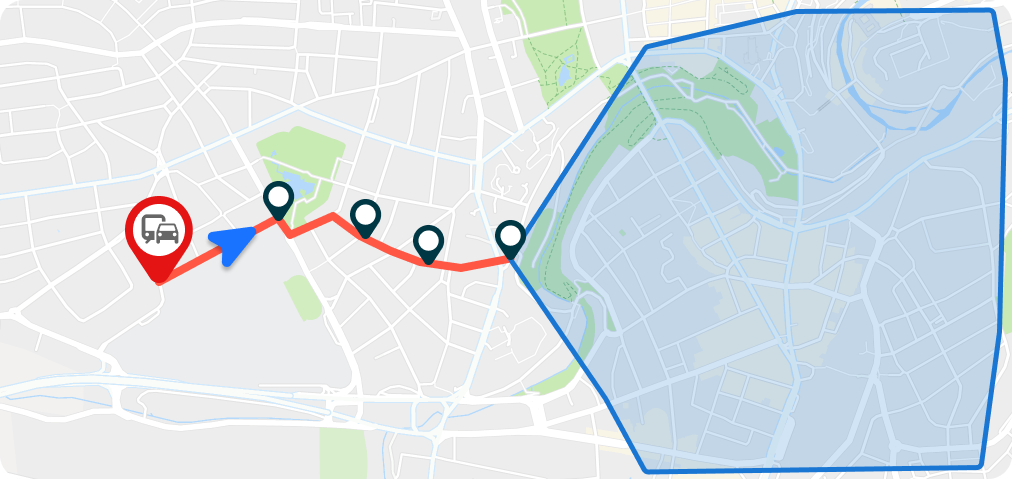
Half flexible services combine fixed and flexible elements.
Part of the route or timetable is fixed, while other stops are only served on demand. The system thus combines the flexibility of an on-demand service with the frequency and planning reliability of traditional public transport, without compromising reliability or generating the high operating costs of fully demand-responsive services. Stops can be mandatory, optional or restricted, for example only for pick-up or drop-off.
This keeps the service familiar for passengers while allowing operators to adapt trips to actual demand.
Multifeeder
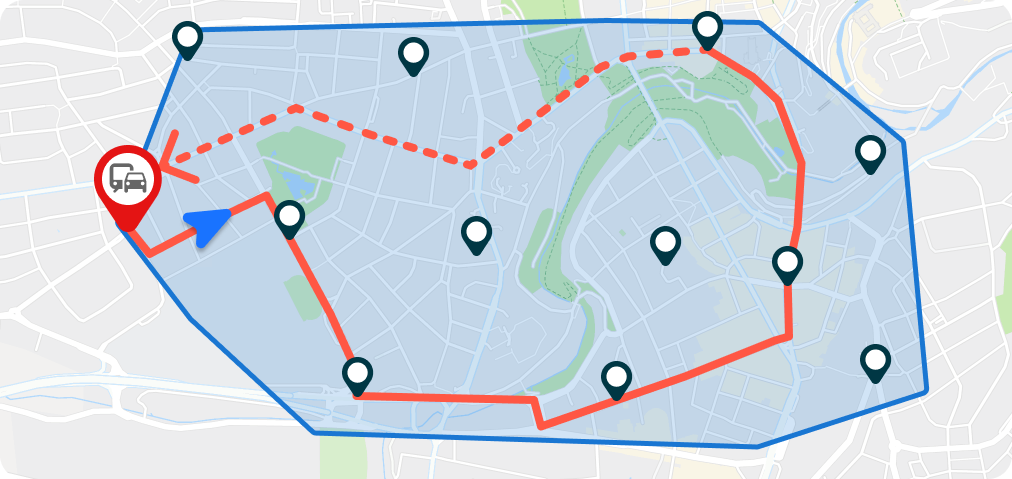
A multifeeder model connects several origins to one or more important hubs.
Passengers are collected from different stops and brought to a central point, such as a train station, bus hub or mobility node. This makes the model especially relevant for first- and last-mile connections.
This role is especially important when DRT is used to strengthen existing public transport. In ADKflex, for example, 84% of intermodal users combined the service with rail.
Fixed line
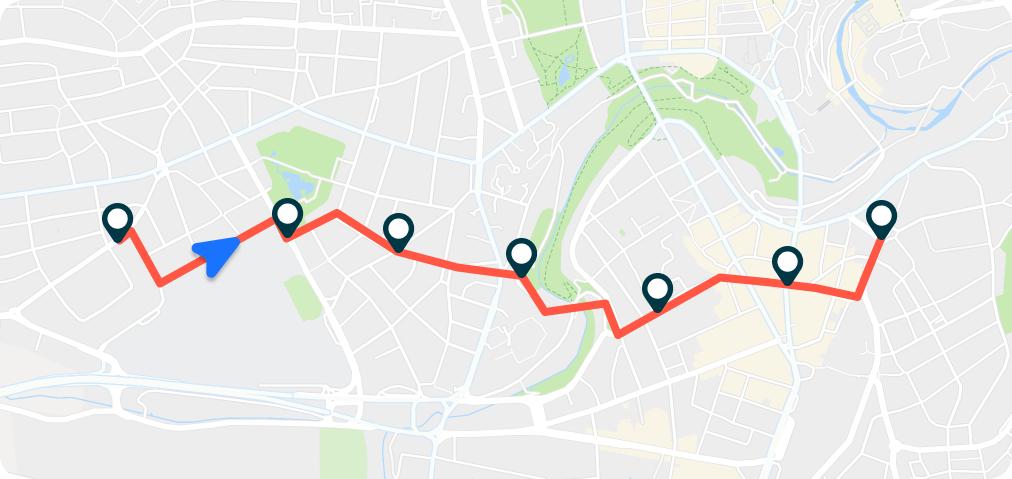
A fixed line follows a defined route, fixed stops and usually a fixed timetable, similar to the traditional bus services.
It is easy to understand and efficient when demand is stable and many passengers travel along the same corridor. Passengers do not need to book in advance.
However, in low-demand areas or during off-peak hours, fixed lines can lead to low vehicle utilization and unnecessary trips.
Virtual line
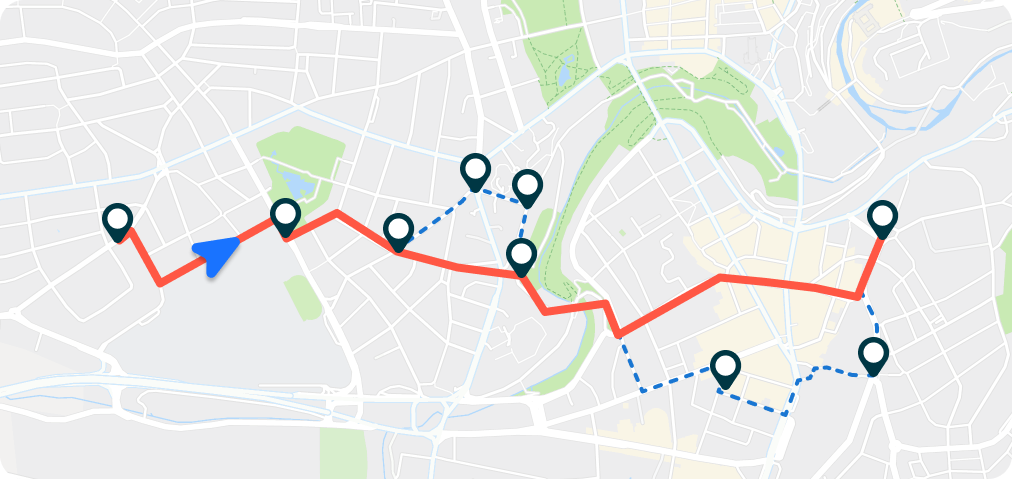
A virtual line works like a line in the background, but with more flexible execution.
Passengers still see a clear structure, such as defined stops, corridors or departure times. Behind the scenes, the system only serves the stops that are actually needed.
ADKflex is one example of this logic. It operates with six virtual line corridors and a fixed rhythm, making it more structured than fully flexible DRT.
Choosing the right model
There is no single best model for every region.
This is for instance reflected in data from the Prognos / KE-CONSULT evaluation of on-demand transport in Baden-Württemberg. In rural on-demand projects, vehicle kilometres per completed ride were 87% higher than in urban and suburban projects. Costs per completed ride also ranged from around €22 to €55.
At the same time, around one in five rides would not have been made without the on-demand service. This shows that DRT is not only about efficiency, but also about access.
Some regions need maximum flexibility. Others benefit from more structure, clearer corridors or feeder connections.
The goal is not to make every service fully flexible. It is to choose the right operating model for the region.
If you would like advice on which type of transport is right for your region, contact our experts. We help you find the right solution for your project.
Source: Prognos / KE-CONSULT, Begleitforschung zur Förderung von On-Demand-Verkehren, 2024.