

For on-demand transport operators, booking management is a core operational process. Every day, operations teams handle phone calls, manage passenger data and schedule trips — often under significant time pressure.
At Simdle Mobility, we continuously improve our operations and service management software, Simdle Operator, to support these real-world constraints. The goal is to make bookings faster, clearer and more intuitive, so day-to-day operations run efficiently and cost-effectively. In this article, you will learn more about the booking experience inside Simdle Operator.
Designed for real operational pressure
You have a passenger on the phone. The next call is already waiting. You have 30 seconds to complete a booking.For many transport operators and call centre teams, this is a daily reality.
In high-volume operations, booking speed is not a luxury. It directly affects call waiting times, operator workload, and overall service quality. Every additional click or page change slows the process.
The updated booking workflow in Simdle Operator was refined with this operational reality in mind.
A Structured Flow That Supports Speed
Every ride begins with a booking. That first step influences dispatching, pricing, vehicle assignment, and ultimately, service reliability.
Operators often manage multiple transport services, fare structures, passenger categories, return trips, and recurring journeys, all within the same shift. The booking interface must support this complexity without becoming overwhelming.
The updated flow guides our clients through a clear, structured sequence. Information is presented logically and only when relevant to the service context. This reduces distractions and allows operators to complete DRT bookings efficiently, even during peak periods.
Creating a Passenger Without Leaving the Booking Flow
In phone-based operations, switching between pages to create or search for a passenger interrupts the workflow.
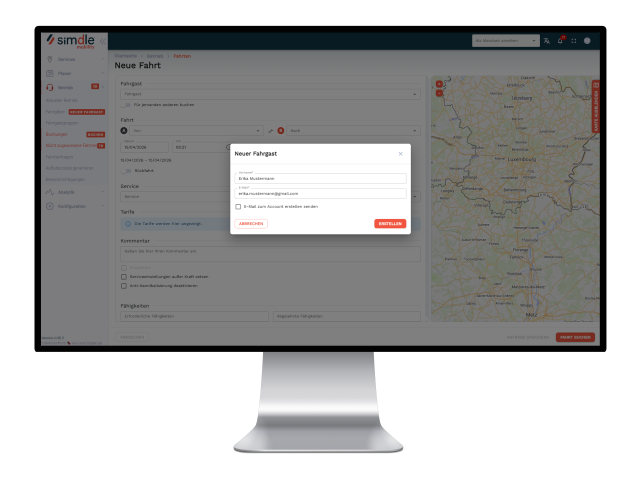
Operators can now search for a passenger by name, phone number, or email directly within the booking process. If the passenger does not exist yet, their account can be created immediately without leaving the page.
For operations teams handling a high volume of calls, this keeps the interaction with the passenger continuous and avoids unnecessary navigation steps.
Making Recurring Bookings Practical
Recurring travel is common in on-demand mobility services. Daily commutes, scheduled appointments, and employee transport often require operators to do multiple bookings at once.
Without the right tools, recurring travel means repeating the same booking steps again and again. If one booking takes around 30 seconds, scheduling a full work week with morning and evening trips can require up to 10 individual bookings. This quickly becomes incompatible with the rhythm of a transport call centre.
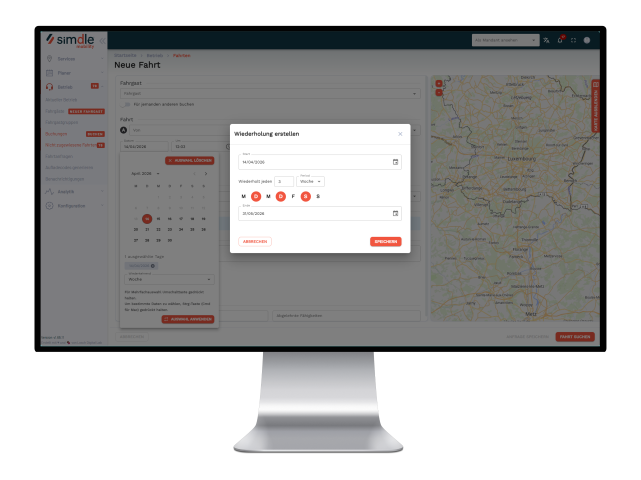
With multi-date and recurring bookings integrated into the flow, operators can create structured reservations in bulk. Instead of repeating the same steps for each day, the schedule can be defined once and reviewed before confirmation.
This significantly reduces processing time while maintaining control over each selected date. For busy operations teams, this smart planning capability has a real impact on daily efficiency.
Adapting to Different Service Contexts
On‑demand transport services operate in very different contexts, and booking requirements vary accordingly.
For example, one client operating near airport areas explained: "When operating airport transfers, we often collect the flight number during booking. This allows our team to check arrival times and adjust pickups in case of delays."
In that context, the flight number field is essential. For services that do not operate near airports, the same field would add unnecessary complexity.
With configurable booking fields, operators can adapt booking forms to their operational model. Relevant fields can be enabled where needed and hidden where they are not.
This gives transport operators greater flexibility and control, while keeping the interface clean and easy to use.
Optimised for Operators on the Move
Nicht alle Mitarbeitenden im Betrieb arbeiten an einem festen Arbeitsplatz.
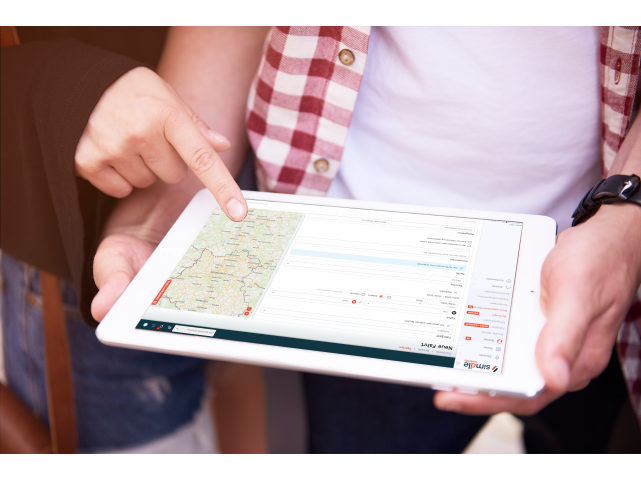
As one client shared: "Our call centre operators sometimes work in the field. They do not always have access to a laptop. We needed a booking interface that works smoothly on tablets."
For these scenarios, the booking interface in Simdle Operator has been optimised to be lightweight and responsive across devices. Operators can manage reservations reliably from tablets without compromising usability.
Strengthening a Core Operational Workflow
The updated booking experience focuses on improving a process that transport operators rely on every day.
Key improvements include:
• A structured and intuitive flow
• Inline passenger creation
• Configurable fields based on service context
•Efficient recurring and multi‑date bookings
• Reliable performance across devices.
In DRT or any type of mobility operations, reliability begins with the booking. When that step is efficient and aligned with real operational needs, everything downstream benefits.
If you want to learn more about our demand-responsive transport solution or book a demo of it, don’t hesitate to reach out.